The geopolitical landscape of the Middle East witnessed a dramatic escalation after powerful explosions struck a major airport in Tehran, sending shockwaves through regional and global security circles. Reports indicate that Israeli forces conducted precision airstrikes targeting strategic infrastructure linked to Iran’s military establishment. The attack marks a significant development in the ongoing tensions between Israel and Iran and signals what analysts describe as a new phase of modern geopolitical confrontation.
Strategic Airstrikes in Tehran
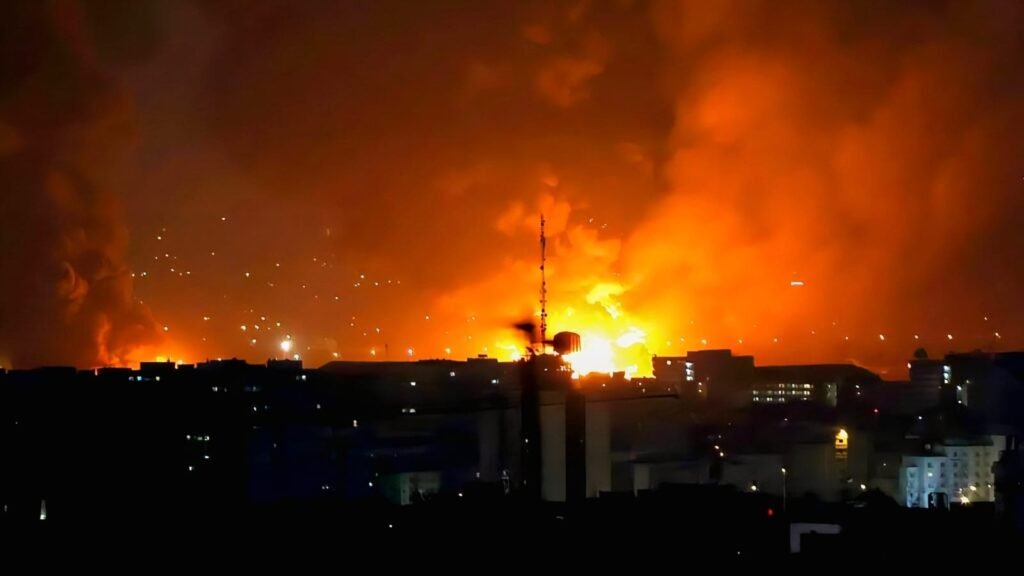
According to multiple international reports, a series of powerful explosions were heard near Mehrabad International Airport, one of the primary aviation hubs in Tehran. While the airport serves civilian flights, it has also historically been associated with military logistics and air defense facilities.
Israeli officials stated that the strikes were directed at “regime infrastructure,” a term often used to describe strategic installations linked to military command networks, weapons storage sites, and defense coordination centers. Security analysts suggest that targeting such infrastructure aims to weaken operational capabilities without directly engaging in large-scale ground warfare.
The explosions reportedly triggered fires and emergency responses in several sections of the airport area. Iranian authorities activated air defense systems immediately after the strikes, while emergency teams were deployed to contain damage and restore operational stability.
Escalating Israel-Iran Tensions
The confrontation between Israel and Iran has intensified in recent years due to competing regional ambitions, security concerns, and ideological differences. Israel has consistently expressed alarm over Iran’s expanding military influence and its alleged support for armed groups across the Middle East.
For years, the two nations have engaged in a shadow conflict characterized by cyber operations, covert intelligence activities, and targeted strikes. However, recent events suggest that this rivalry may be transitioning from indirect confrontation to more overt military engagement.
Defense analysts view the Tehran airport incident as part of a broader strategy aimed at curbing Iran’s operational reach. By striking infrastructure connected to logistical coordination, Israel could potentially disrupt military planning and weaken Iran’s ability to support allied forces across the region.
The Strategic Importance of Tehran
As the political and military center of Iran, Tehran plays a crucial role in the nation’s command structure. Many key government institutions, intelligence headquarters, and military planning centers are located within or around the capital.
Strikes near such a central location carry significant symbolic and strategic implications. They demonstrate the reach of advanced aerial and intelligence capabilities while sending a strong deterrent message. At the same time, attacks in the vicinity of major urban centers raise serious concerns about civilian safety and the risk of broader escalation.
Military experts note that targeting infrastructure rather than population centers reflects a calculated effort to maintain strategic pressure while avoiding humanitarian catastrophe. Nevertheless, the proximity of military assets to civilian infrastructure often complicates the situation on the ground.
Regional Implications and Security Concerns
The airstrikes in Tehran have amplified fears of a wider regional conflict. The Middle East already faces multiple security challenges, including the ongoing Israel-Hamas War, instability in Lebanon, and broader geopolitical rivalries involving global powers.
If tensions between Israel and Iran continue to escalate, the consequences could extend far beyond the immediate region. Military alliances, proxy groups, and strategic partnerships could draw additional actors into the conflict.
Regional defense analysts warn that prolonged confrontation could disrupt energy markets, international trade routes, and diplomatic relations. The Middle East remains one of the world’s most strategically significant regions due to its vast energy resources and its role in global shipping corridors.
Technological Warfare and Modern Military Strategy
The Tehran airport strike also highlights the evolving nature of modern warfare. Precision-guided munitions, advanced intelligence networks, and aerial surveillance technologies now enable targeted operations with unprecedented accuracy.
Modern military strategies increasingly rely on strategic infrastructure strikes rather than traditional battlefield engagements. By disrupting command systems, communication networks, and logistical hubs, military planners aim to degrade an opponent’s capabilities while minimizing large-scale troop deployments.
In this context, the attack reflects broader trends in contemporary conflict, where cyber warfare, drone operations, and intelligence-driven targeting have become essential components of national defense strategies.
Global Reaction and Diplomatic Response
International reactions to the Tehran incident have been swift. Governments and global organizations have expressed concern about the potential for further escalation and have called for diplomatic restraint. Many foreign policy experts emphasize that prolonged conflict between Israel and Iran could destabilize not only the Middle East but also global security dynamics.
Economic markets also reacted cautiously to the news, with analysts closely monitoring oil prices and regional trade stability. Energy supply routes and maritime corridors could face disruptions if tensions intensify.
Diplomatic channels remain active as international stakeholders attempt to prevent the situation from spiraling into a larger war. Historically, moments of acute escalation have often been followed by renewed diplomatic efforts aimed at de-escalation and conflict management.
The Uncertain Path Forward
The explosions near Tehran’s airport represent more than a single military incident; they symbolize the fragile balance of power in the Middle East. As regional rivalries intensify, the potential for miscalculation increases, raising the stakes for both military and political leaders.
While Israel emphasizes security and strategic deterrence, Iran is likely to consider retaliatory options, which could further escalate tensions. The coming weeks will be critical in determining whether diplomacy can contain the situation or whether the region is entering a prolonged phase of confrontation.
Conclusion
The airstrikes near Mehrabad International Airport in Tehran mark a pivotal moment in the evolving geopolitical rivalry between Israel and Iran. As explosions reverberated across the Iranian capital, the incident underscored the volatility of Middle Eastern politics and the complexity of modern warfare.
With regional stability hanging in the balance, global leaders, security analysts, and diplomatic institutions are closely watching the unfolding developments. Whether this event becomes a catalyst for wider conflict or a turning point toward renewed negotiations will depend on the decisions made in the days ahead.
In an era defined by technological warfare, geopolitical competition, and fragile alliances, the events in Tehran serve as a powerful reminder that the quest for security and influence continues to shape the global political landscape.