
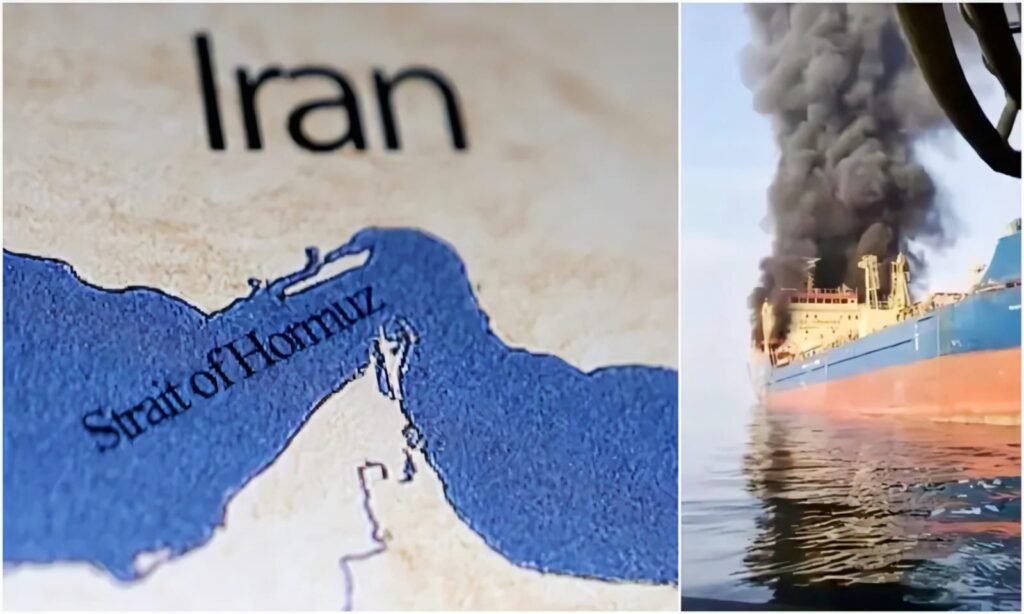
The strategic waters of the Middle East have once again become the center of international attention following reports of attacks on oil tankers near the Strait of Hormuz. The incident has intensified geopolitical tensions between Iran and the United States, raising concerns about maritime security, global energy stability, and the future of international diplomacy.
The attacks—reportedly targeting vessels transporting crude oil—have sparked global debate regarding the safety of international shipping routes in the Persian Gulf. As one of the world’s most vital oil transit corridors, any disruption in this region has the potential to trigger widespread economic and political consequences.
The Strategic Importance of the Strait of Hormuz
The Strait of Hormuz is widely regarded as one of the most critical maritime passages in the global energy supply chain. Connecting the Persian Gulf to international waters, the narrow strait facilitates the transportation of a substantial portion of the world’s crude oil exports.
Energy analysts estimate that nearly one-fifth of the world’s oil supply passes through this channel each day. Major oil-producing nations—including Saudi Arabia, the United Arab Emirates, Kuwait, and Iraq—rely heavily on this route to deliver petroleum to global markets.
Consequently, any military confrontation or security threat in the area immediately reverberates through international energy markets. Reports of tanker attacks have therefore heightened fears of potential disruptions to the global oil supply.
The Incident and Its Immediate Impact
Recent maritime security reports indicate that multiple oil tankers operating in the region were damaged during coordinated attacks. While investigations are ongoing, the incident has been widely linked to escalating tensions between Iran and the United States, both of which maintain significant strategic interests in the Gulf.
Initial accounts suggest that explosive devices or missile strikes targeted vessels navigating international waters. The attacks reportedly resulted in fires aboard the tankers, forcing emergency responses from nearby naval forces and maritime rescue teams.
Although the full extent of the damage remains under investigation, the event has reignited global concerns about the vulnerability of commercial shipping routes in geopolitically sensitive regions.
Escalating Geopolitical Rivalry
The confrontation between Iran and the United States is deeply rooted in decades of political rivalry, economic sanctions, and strategic competition in the Middle East.
Tensions have intensified in recent years due to disagreements over Iran’s nuclear program, regional influence, and military presence in the Gulf. Diplomatic negotiations aimed at stabilizing relations have frequently stalled, while military posturing on both sides has increased.
The recent tanker attacks have further complicated an already fragile diplomatic environment. International observers fear that continued escalation could lead to a broader maritime conflict involving multiple regional and global powers.
Economic Consequences for the Global Energy Market
Beyond the immediate security implications, the attacks have had a noticeable impact on the global energy market. Oil prices often respond rapidly to geopolitical developments, and threats to critical shipping lanes can trigger volatility in international markets.
Following reports of tanker damage, energy traders expressed concern about potential disruptions to oil exports. Even the possibility of restricted shipping through the Strait of Hormuz can influence crude oil prices, transportation costs, and global fuel supply chains.
Countries heavily dependent on imported energy resources—particularly in Europe and Asia—are especially sensitive to such disruptions. For these economies, stable access to Middle Eastern oil remains a crucial component of economic security.
International Reactions and Security Measures
In response to the attacks, several countries have called for increased maritime security cooperation in the Persian Gulf. Naval patrols in the region have been strengthened to protect commercial vessels and maintain safe passage for international trade.
The United Nations and other diplomatic institutions have also urged restraint from all parties involved, emphasizing the importance of dialogue and de-escalation.
Military analysts warn that continued incidents of this nature could prompt expanded naval deployments, potentially transforming the Gulf into an even more militarized zone.
The Role of Maritime Security in Modern Geopolitics
The attacks highlight the growing significance of maritime security in contemporary geopolitics. In an interconnected global economy, shipping routes function as the arteries of international commerce, enabling the movement of energy resources, raw materials, and consumer goods.
Threats to these routes can therefore have cascading effects across multiple industries. From energy markets to global trade logistics, disruptions in maritime transport systems can influence economic stability worldwide.
Consequently, governments and international organizations increasingly prioritize the protection of strategic waterways such as the Strait of Hormuz.
Diplomatic Challenges Ahead
While military responses often dominate headlines, long-term stability in the region ultimately depends on diplomatic engagement. Negotiations concerning nuclear policy, economic sanctions, and regional security remain essential to reducing tensions between Iran and the United States.
Diplomats argue that sustained dialogue is the only viable path toward preventing further escalation and ensuring safe navigation in the Gulf. Without meaningful diplomatic progress, the risk of recurring maritime incidents will likely remain high.
Conclusion
The recent attacks on oil tankers near the Strait of Hormuz serve as a stark reminder of the fragile security environment in one of the world’s most strategically important regions. As tensions between Iran and the United States continue to shape the geopolitical landscape, the safety of global energy routes remains a matter of urgent international concern.
For policymakers, the challenge lies in balancing deterrence with diplomacy—ensuring that the Gulf remains a secure corridor for global commerce while preventing a regional confrontation that could disrupt the international order.
In an era defined by interconnected economies and complex geopolitical rivalries, the events unfolding in the Persian Gulf demonstrate how regional conflicts can quickly evolve into global concerns. The future stability of the region will therefore depend not only on military preparedness but also on the willingness of global leaders to pursue constructive diplomatic solutions.


