
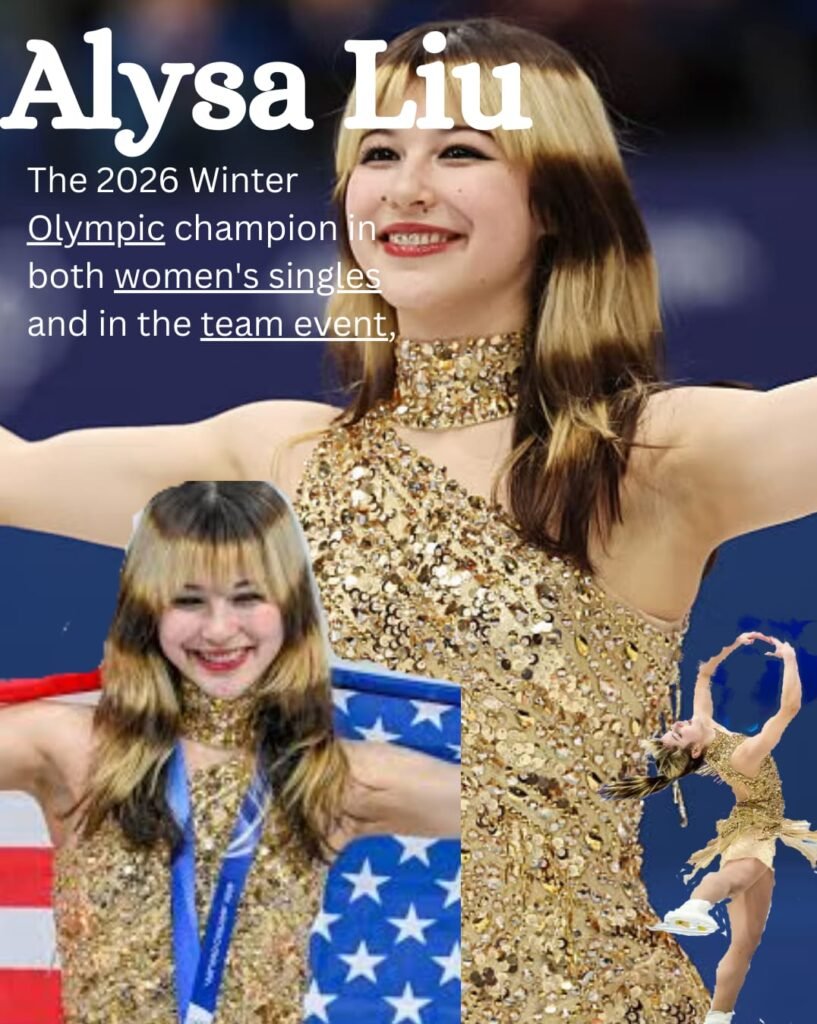
Alysa Liu has become one of the most compelling figures in international sport after her incredible performance at the 2026 Winter Olympics in Milan-Cortina, Italy. Her journey — from prodigy to burnout, from college life back to elite competition, and ultimately to Olympic gold — has captured the world’s attention and inspired a new generation of athletes.
At just 20 years old, Liu delivered a breathtaking performance in the women’s figure skating event, winning the gold medal and ending a 24-year drought for American women in the sport. This triumph marked the first Olympic gold for a U.S. woman in figure skating since Sarah Hughes in 2002, a historic moment that has reignited enthusiasm for figure skating across the United States and around the world.
The Journey to Olympic Glory
Liu’s story is one of dramatic highs and personal transformation. She first emerged as a skating phenom at a very young age, setting records and earning unprecedented achievements as a junior and senior competitor. However, after the 2022 Beijing Olympics, Liu shocked the skating community by announcing her retirement at age 16, citing burnout and the overwhelming pressures of competitive sport.
Rather than fading away, Liu used her time off to explore life beyond skating: she enrolled at UCLA, spent time with friends and family, traveled, and rediscovered her love for movement and expression outside of competition. This time away allowed her to rebuild her mental focus and reconnect with what originally drove her to the ice — joy, creativity, and artistry.
When Liu announced her comeback in 2024, she did so on her own terms. She insisted on greater control over her training, music, choreography, and even personal style. This emphasis on autonomy, rather than pressure to conform to expectations, became a defining part of her narrative leading into the 2026 Olympics.
Olympic Performance That Captivated the World
In Milan, Liu entered the competition positioned behind her Japanese rivals after the short program, but she stunned judges and audiences in the free skate. Skating to the Donna Summer classic “MacArthur Park Suite,” she delivered a nearly flawless routine, completing all seven triple jumps and performing with both technical precision and emotional depth. Her final score of 226.79 points was enough to secure the gold medal — a tightly contested victory just ahead of Japan’s Kaori Sakamoto, who took silver.
What made this achievement especially remarkable was not just the medal itself, but the context behind it. Liu had walked away from the sport in her youth, unsure if she would ever return to elite competition. Yet her decision to come back, rediscover the fun of skating, and compete with renewed purpose resonated with fans globally. She continually spoke about competing for herself and embracing the experience — not just chasing medals — a mindset that many commentators and fellow athletes praised as transformative.
A New Generation of Figure Skating Fans
One of the most powerful aspects of Liu’s Olympic run was how she connected with fans beyond traditional skating circles. On social media, her personality — a blend of fierce competitive spirit and genuine warmth — helped her transcend the sport’s usual audience and become a broader cultural figure. From viral moments like her expressive smile to interactions with other athletes and fans, Liu’s presence at the Olympics became one of the most talked-about stories of the Games.
Local celebrations followed her win as well. In Oakland, where Liu trained and grew up, a beloved creamery offered her free ice cream for life in recognition of her achievements, and civic leaders called for community events to honor her Olympic success. These hometown tributes highlight the pride that many felt for someone who came from a grassroots skating background and made history on the world’s biggest stage.
Impact Beyond the Ice
Liu’s gold medal carries significance beyond the figure skating world. Her journey challenges stereotypes about athlete burnout, mental health, and the pressures faced by young competitors. Her decision to step away from the sport — and then return with a healthier mindset — has sparked conversations about how athletes balance performance and personal wellbeing.
Beyond her Olympic victory, Liu has also become a role model for young girls and boys who aspire to follow in her footsteps. Her emphasis on joy over pressure, self-determination over rigid expectations, and creativity over conformity resonates with fans who see her not just as a champion, but as a voice for a new era in competitive sport.
What Comes Next?
As Liu heads into the next chapter of her career, many in the skating community are asking what she will do next. Will she defend her world title? Continue to innovate with music and choreography? Or perhaps expand her influence outside of competition, through media, mentoring, or design? Her evolution as both an athlete and a person suggests that whatever direction she takes, it will be guided by her own passions and values.
In an age where elite sport can often feel dominated by commercial pressures and relentless competition, Alysa Liu’s Olympic victory at the 2026 Winter Games is a reminder of the beauty of sport at its best — a blend of passion, resilience, and personal fulfillment.


