
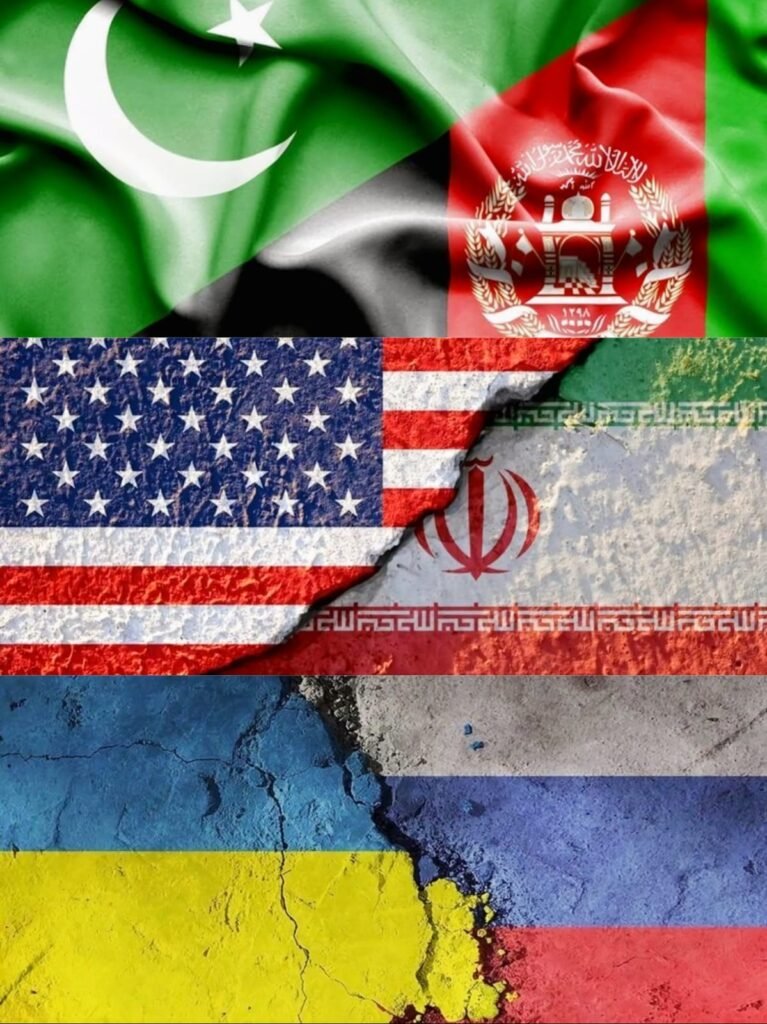
The year 2026 has opened under the shadow of intensifying global conflicts, with multiple regions experiencing heightened instability. From Eastern Europe to the Middle East and South Asia, geopolitical tensions are shaping international diplomacy, defense strategies, and global markets. As trending headlines focus on military escalation, drone warfare, regional alliances, and security crises, the world is witnessing a complex transformation in modern warfare.
Eastern Europe: The Ongoing Russia-Ukraine War
The Russia-Ukraine War remains one of the most consequential geopolitical crises of the decade. Now entering its fourth year, the conflict continues to redefine European security architecture. Despite multiple diplomatic initiatives and intermittent ceasefire discussions, missile strikes, drone operations, and cyber warfare persist.
Ukraine has increasingly relied on advanced defense systems and international military aid, while Russia has maintained strategic offensives targeting infrastructure and logistics networks. Energy security remains a central theme, as European nations navigate supply disruptions and economic ripple effects. Trending keywords such as drone warfare, NATO support, sanctions regime, and military escalation dominate global search trends.
The war has also accelerated innovation in unmanned combat systems and electronic warfare, highlighting how technology is reshaping battlefield strategy. Analysts suggest that even if active combat decreases, long-term regional instability may continue to influence global diplomacy.
Middle East: Expanding Regional Confrontations
The Middle East is once again at the center of global attention. The Israel-Hamas War continues to fuel instability across the region. While ceasefire negotiations periodically emerge, hostilities in and around Gaza frequently resume, affecting civilian populations and regional alliances.
Tensions have further intensified with rising friction between Iran and Israel, with indirect confrontations expanding through proxy groups and strategic military signaling. The involvement of Hezbollah in cross-border exchanges has added another layer of volatility, particularly along the Lebanon-Israel frontier.
Meanwhile, the United States maintains a significant military presence in the region, aiming to deter further escalation while protecting strategic interests. Air defense systems, naval deployments, and regional alliances are central to this containment strategy.
Trending keywords connected to the Middle East crisis include regional escalation, proxy warfare, missile defense systems, Red Sea security, and oil market volatility. Global energy markets remain sensitive to developments, as even limited disruptions can trigger significant economic consequences.
South Asia: Rising Border Tensions
In South Asia, cross-border tensions between Pakistan and Afghanistan have drawn international concern. Military operations targeting militant networks near border regions have resulted in retaliatory exchanges and heightened diplomatic strain.
Security analysts describe the situation as fragile, with both nations balancing counterterrorism objectives against the risks of broader confrontation. Border security, militant activity, and regional stability are key themes trending in international defense discussions.
The situation highlights a broader global pattern: conflicts are no longer isolated events but interconnected security challenges. Instability in one region often reverberates across diplomatic corridors worldwide.
The Evolution of Modern Warfare
One of the defining characteristics of 2026’s conflicts is the transformation of warfare itself. Unlike traditional large-scale troop deployments of previous decades, today’s battlefields are shaped by:
- Drone technology and unmanned aerial systems
- Cyber warfare and digital sabotage
- Artificial intelligence in military strategy
- Precision missile systems
- Information warfare and media influence
Hybrid warfare—combining military force with cyber operations, economic sanctions, and information campaigns—has become a dominant strategic approach. Nations are increasingly competing not only on physical battlefields but also in cyberspace and financial systems.
The proliferation of real-time media coverage and social platforms has also changed how wars are perceived globally. Public opinion, viral footage, and digital diplomacy now influence policy decisions in ways previously unimaginable.
Global Economic and Political Impact
The economic consequences of ongoing conflicts cannot be overstated. Defense spending has surged globally, with many nations revising military budgets and modernizing arsenals. Supply chain disruptions, rising energy prices, and investor uncertainty have become recurring themes in financial markets.
Trending economic keywords include defense sector growth, global recession risks, energy crisis 2026, and geopolitical risk index. Investors and policymakers alike are closely monitoring developments, aware that prolonged instability could reshape global trade routes and alliances.
Politically, the conflicts have accelerated shifts toward strategic blocs. Alliances are being strengthened, new defense agreements are emerging, and diplomatic alignments are evolving. International institutions face mounting pressure to mediate while maintaining neutrality.
Humanitarian Concerns and Civilian Impact
Beyond geopolitics and strategy lies the human dimension. Civilian populations in affected regions continue to endure displacement, infrastructure damage, and economic hardship. Humanitarian aid organizations are operating under increasingly challenging conditions, often navigating active conflict zones.
Global discussions surrounding refugee crises, war crimes investigations, and human rights monitoring remain central to international discourse. The humanitarian cost underscores the urgency of diplomatic solutions.
Conclusion: A Defining Year for Global Stability
The geopolitical landscape of 2026 reflects a world navigating complex, interconnected conflicts. The Russia-Ukraine war, Middle Eastern escalations, and South Asian tensions collectively signal a broader era of strategic competition and regional volatility.
While diplomatic channels remain active, the trajectory of these conflicts will significantly influence global security, economic stability, and technological advancement in warfare. As trending war news continues to dominate headlines, the international community faces a critical question: will escalation define the decade, or will diplomacy regain momentum?
In a world increasingly shaped by strategic rivalry and rapid technological evolution, the path forward demands calculated leadership, sustained dialogue, and a renewed commitment to global stability.


