
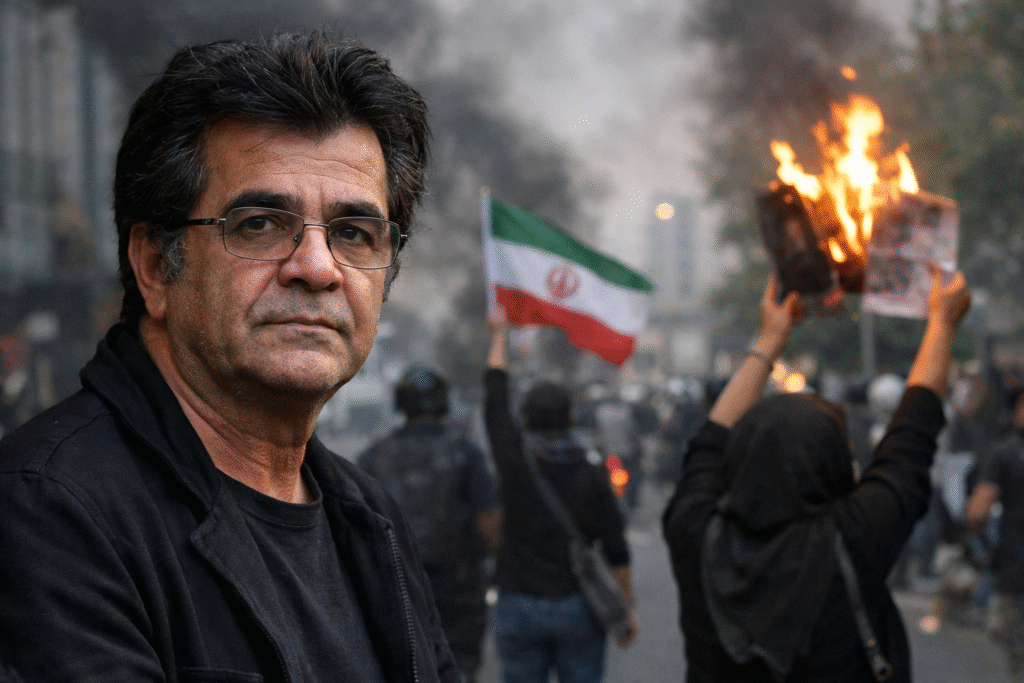
Veteran Iranian director Jafar Panahi, internationally acclaimed for his bold storytelling and defiance of state censorship, has declared that the Islamic Republic of Iran has “effectively collapsed” across political, economic, and ideological dimensions. Speaking in a recent interview while promoting his latest film, It Was Just an Accident, Panahi’s stark assessment reflects the profound turmoil gripping his homeland as massive anti-government protests enter a dangerous new phase.
Panahi, a Palme d’Or winner whose work often challenges authoritarian structures, made the comments via a translator earlier this month — describing the current regime as little more than a hollow shell struggling to maintain control amid widespread civic unrest. “It has fallen politically, economically, ideologically and even environmentally,” he said, emphasizing that only a superficial façade of power remains.
From Artistic Resistance to Political Commentator
The director’s latest film, It Was Just an Accident, premiered at the 2025 Cannes Film Festival where it won the festival’s top honor. Shot secretly in Iran without government permission, the movie centers on former political prisoners wrestling with the moral questions of revenge and forgiveness — a thinly veiled reflection on justice, trauma, and societal reconciliation after decades of repression.
Panahi has long been an outspoken critic of the Iranian establishment. His career, spanning decades of critically celebrated work, has repeatedly brought him into conflict with Iranian authorities. Earlier punitive measures included imprisonment, travel bans, and a lengthy prohibition on filmmaking. In late 2025 he was sentenced in absentia to another year in prison and barred from travel and political association for two years — a ruling he and his legal team are appealing.
Despite the risks, Panahi remains committed to using cinema as a tool to question oppression. His recent acceptance speech at the National Board of Review Awards in New York saw him urge Hollywood and global filmmakers to amplify the Iranian protest movement, calling the violence “a reality ridden with bullets” rather than just artistic metaphor.
A Nation in Upheaval
The director’s comments come against the backdrop of one of the most sustained protest movements in the country’s history. Sparked initially by economic hardship and political repression, demonstrations rapidly widened to encompass broad calls for regime accountability and reform. Independent reports suggest thousands have been killed and many more detained, even as Tehran enforces strict internet blackouts to limit communications.
Internationally, Panahi has implored world audiences and governments alike to recognize the severity of the crisis and the regime’s violent response to dissent. In interviews and speeches abroad, he has warned that the state’s tactics amount to systematic bloodshed, urging artistic communities to stand in solidarity with the Iranian people.
What Comes Next?
Even as Panahi’s comments signal deep pessimism about the regime’s sustainability, the filmmaker — now based in Los Angeles for campaigning purposes — has expressed a desire to return to Iran once his artistic obligations abroad conclude. His question, both within his film and public statements, persistently returns to a central dilemma: After an authoritarian system falls, can a nation break the cycle of violence and build a more just society?
For Panahi, and many Iranians watching these events unfold, the answer remains uncertain — but the urgency of the moment continues to fuel both cinematic expression and grassroots resistance.


