
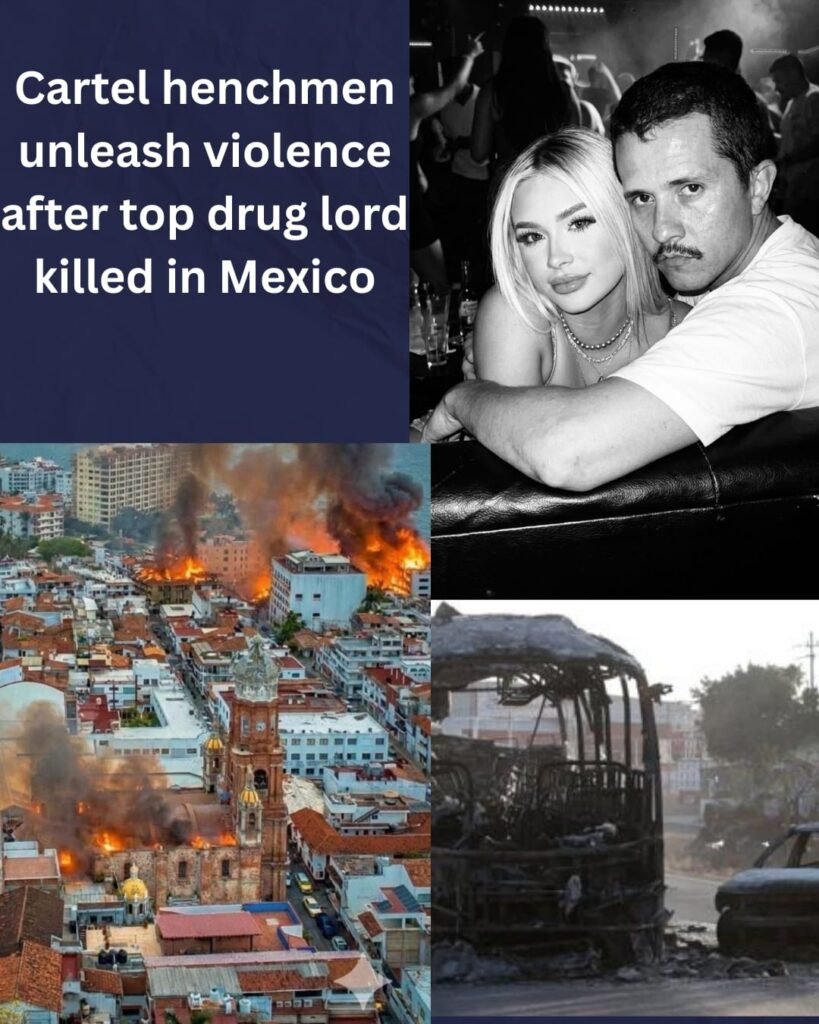
Mexico cartel attack, El Mencho killed, CJNG violence, Jalisco unrest, and Mexico security crisis 2026 are dominating global headlines after one of the country’s most powerful drug lords was confirmed dead during a military operation. The killing of Nemesio Oseguera Cervantes, widely known as El Mencho, has triggered a wave of violence across western Mexico, raising fears of prolonged instability.
Who Was El Mencho?
El Mencho was the leader of the Jalisco New Generation Cartel (CJNG), considered one of the most dangerous and rapidly expanding criminal organizations in Latin America. Over the past decade, CJNG became a dominant force in drug trafficking, arms smuggling, and organized crime operations, both inside Mexico and internationally.
Under his leadership, CJNG built a reputation for aggressive territorial expansion and violent retaliation against rivals and security forces. His death marks a historic moment in Mexico’s ongoing war against cartels—but it has also sparked immediate consequences.
What Happened?
According to official reports, Mexican security forces carried out a targeted military operation aimed at capturing El Mencho. During the confrontation, he was killed. Within hours of confirmation, cartel violence erupted across multiple cities in the state of Jalisco.
Major urban centers such as Guadalajara experienced road blockades, vehicle burnings, and armed clashes. In tourist hubs like Puerto Vallarta, reports of unrest caused panic among residents and visitors. Flights were delayed, highways were shut down, and local authorities issued emergency safety advisories.
The Mexican government responded by deploying thousands of additional troops to stabilize the region, signaling how serious the situation has become.
Why Is Violence Escalating?
Security experts warn that the killing of a cartel leader often creates a power vacuum. In criminal organizations like CJNG, leadership transitions can be violent. Rival factions may compete for control, while remaining loyalists may launch retaliatory attacks to demonstrate strength.
Trending keywords such as “cartel retaliation,” “Mexico military operation,” “drug war escalation,” and “Jalisco state of emergency” reflect growing public concern. Analysts believe that the coming weeks will be critical in determining whether the violence subsides or intensifies.
Historically, similar operations against cartel leaders have produced mixed results. While removing high-profile figures weakens centralized command, it can also fragment organizations into smaller, unpredictable groups.
Impact on Civilians and Tourism
The recent unrest has had immediate social and economic consequences. Schools temporarily closed in some districts, businesses reduced operating hours, and residents were advised to remain indoors in affected areas.
Jalisco is not only a cartel stronghold—it is also a major economic and tourism center. Cities like Guadalajara serve as commercial hubs, while Puerto Vallarta attracts international tourists. The sudden surge in violence has raised questions about travel safety and investor confidence.
International observers are closely watching how Mexico manages the aftermath. Travel advisories and security updates are trending globally, alongside phrases like “Is Mexico safe right now?” and “CJNG latest news.”
Government Strategy and Security Response
Mexico’s federal government has emphasized that the operation represents progress in dismantling organized crime leadership. Authorities have increased military patrols, reinforced checkpoints, and expanded intelligence operations to prevent further escalation.
However, critics argue that long-term success depends not only on eliminating cartel bosses but also on addressing corruption, poverty, and weak local institutions. Without structural reform, experts say, new leaders can quickly emerge.
The phrase “Mexico drug war strategy 2026” is now circulating in policy discussions, highlighting renewed debate over how to combat organized crime effectively.
Regional and International Implications
CJNG’s influence extends beyond Mexico. The cartel has been linked to trafficking networks across North America and parts of Europe. As a result, El Mencho’s death is not just a domestic issue—it carries international security implications.
Global agencies are monitoring whether supply routes will be disrupted or whether rival groups will attempt to expand into territories previously controlled by CJNG. Markets, law enforcement agencies, and border authorities are all on alert.
What Happens Next?
The key question remains: Will this operation weaken CJNG permanently, or will it trigger a new cycle of violence?
Security analysts outline three possible scenarios:
Fragmentation: Internal divisions weaken CJNG’s overall power.
Succession: A new leader quickly consolidates control.
Escalation: Rival cartels exploit the power vacuum, leading to broader conflict.
For now, Mexico faces a tense and uncertain period. While the removal of a high-profile cartel leader is a significant milestone, stability will depend on sustained enforcement efforts and community resilience.
Conclusion
The death of Nemesio Oseguera Cervantes marks a turning point in Mexico’s fight against organized crime. Yet the immediate surge in cartel violence underscores the complexity of dismantling powerful criminal networks.
As Mexico cartel violence 2026, El Mencho latest news, and CJNG attack updates continue trending worldwide, the focus remains on whether authorities can restore order and prevent further bloodshed.
The coming days will reveal whether this operation becomes a breakthrough moment—or the beginning of another volatile chapter in Mexico’s long-running drug war.


