
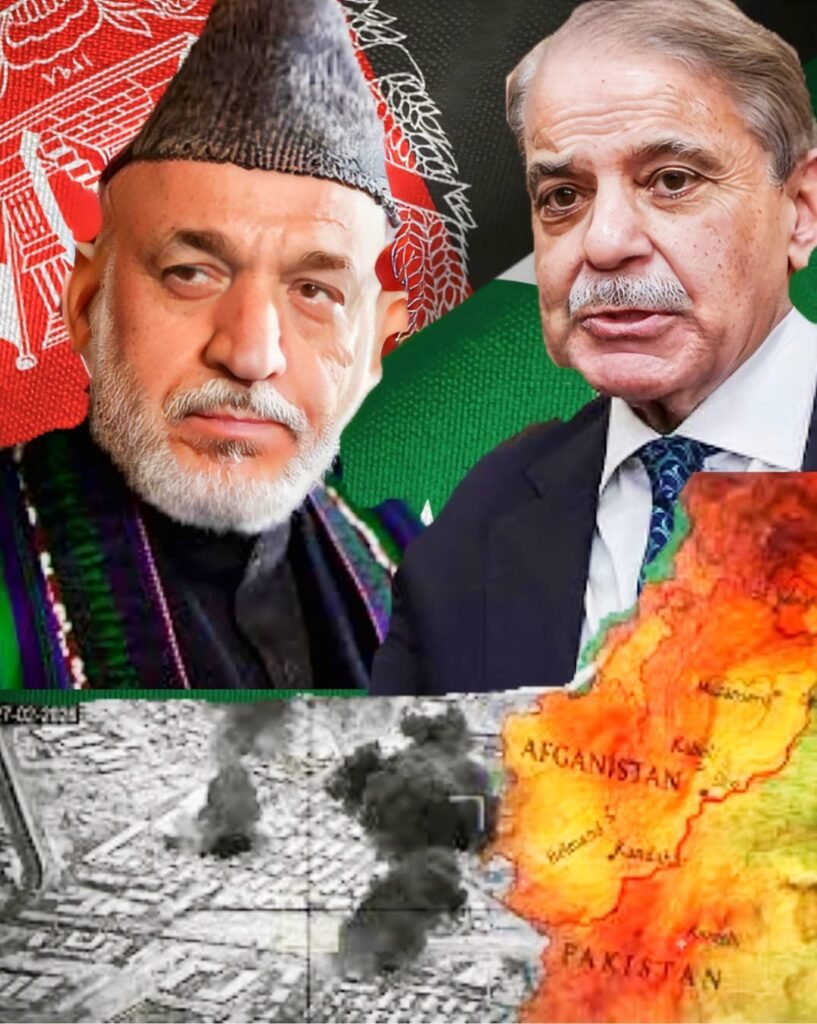
The relationship between Afghanistan and Pakistan has once again entered a period of heightened tension, drawing regional and global attention. While the word “war” is often used in headlines and on social media, the situation is more accurately described as escalating border clashes, diplomatic strain, and security operations that have intensified in recent months. With trending conversations around regional stability, counterterrorism operations, cross-border militancy, geopolitical risk, and South Asia security crisis, the issue has become a hot topic in international affairs.
Historical Roots of the Conflict
The friction between the two neighbors is not new. The core issue dates back to the controversial border known as the Durand Line, drawn during the British colonial era in 1893. Afghanistan has historically disputed this boundary, arguing that it divided ethnic Pashtun communities. Pakistan, on the other hand, considers it an internationally recognized border.
Although the dispute has simmered for decades, tensions have significantly escalated since the return of the Taliban to power in Kabul in 2021. Islamabad initially expected improved security cooperation, but relations have instead grown more complicated.
The Security Dimension: TTP Factor
One of the most pressing issues fueling the current crisis is the presence of the Tehrik-i-Taliban Pakistan (TTP). Pakistan accuses militant fighters of launching cross-border attacks from Afghan territory. According to Pakistani officials, these armed groups have targeted security forces and civilians, increasing instability in border provinces such as Khyber Pakhtunkhwa and Balochistan.
Afghan authorities deny officially supporting such militants but have struggled to fully control all armed factions operating within their territory. This has created a serious trust deficit between the two governments. In response, Pakistan has carried out targeted airstrikes and military operations near the border, claiming they are necessary counterterrorism measures. These actions, however, have sparked strong reactions from Afghan officials, who describe them as violations of sovereignty.
Border Clashes and Military Build-Up
In recent months, cross-border shelling and skirmishes have increased. Both sides have reinforced checkpoints, deployed additional troops, and tightened border controls. Civilians living in frontier regions have been the most affected, facing displacement, school closures, and disruptions in trade.
The humanitarian impact is particularly concerning. Thousands of families rely on cross-border trade and daily movement for income. Border closures have affected food supply chains, small businesses, and medical access. Social media platforms are flooded with hashtags like #BorderCrisis, #SouthAsiaTensions, and #RegionalStability, reflecting growing public anxiety.
Diplomatic Strain Between Islamabad and Kabul
Diplomatic ties between Islamabad and Kabul have become increasingly fragile. High-level meetings have taken place, but breakthroughs remain limited. Pakistan demands decisive action against anti-Pakistan militant networks, while Afghan officials call for dialogue instead of military escalation.
Regional analysts suggest that mutual distrust and internal political pressures on both sides complicate compromise. Pakistan is facing economic challenges and security concerns domestically, while Afghanistan’s leadership is grappling with international isolation, economic hardship, and governance pressures.
Regional and Global Implications
The Afghanistan–Pakistan tension carries broader geopolitical consequences. China, Iran, and Central Asian states are closely monitoring the situation, particularly due to infrastructure investments and trade corridors linked to regional connectivity projects. Any prolonged instability could threaten economic initiatives such as cross-border energy pipelines and trade routes.
The United Nations and other international actors have urged restraint and peaceful resolution. A full-scale conventional war remains unlikely, as both countries understand the devastating economic and humanitarian costs. However, continued limited strikes and retaliatory measures could create a dangerous cycle of escalation.
Security experts warn that if militant groups exploit the tensions, the region could see a surge in extremism. This would not only destabilize border regions but also affect broader South Asian security architecture.
Public Sentiment and Media Narrative
In today’s digital era, narratives spread rapidly. Trending keywords like “breaking news,” “airstrike,” “cross-border attack,” and “security alert” dominate online platforms. While some voices call for strong retaliation, others advocate diplomacy and peacebuilding.
Civil society organizations from both countries have emphasized the importance of people-to-people connections. Shared culture, language, and family ties across the border highlight that ordinary citizens often suffer the most from political disputes.
Is It Really a War?
Despite dramatic headlines, most analysts describe the situation as a series of border confrontations rather than a declared war. There has been no formal announcement of war, nor large-scale troop invasions deep into each other’s territory. Instead, the conflict operates in a “grey zone” of limited military actions, counterterrorism operations, and diplomatic friction.
The risk lies in miscalculation. A single major incident could rapidly escalate tensions. This makes communication channels between military and political leadership extremely important.
The Path Forward
For lasting stability, both sides would need to:
Strengthen border coordination mechanisms
Establish intelligence-sharing frameworks
Engage in sustained diplomatic dialogue
Address the militant safe-haven issue transparently
Protect civilian communities along the frontier
Regional peace depends on cooperation rather than confrontation. The Afghanistan–Pakistan relationship remains one of the most strategically sensitive in South Asia. Whether 2026 becomes remembered for escalation or reconciliation will largely depend on political will, diplomatic maturity, and regional collaboration.
As the world watches this unfolding South Asia security crisis, one thing is clear: sustainable peace requires trust-building measures, not just military responses. The coming months will be critical in shaping the future of this complex and deeply rooted geopolitical rivalry.


