Introduction
Black holes remain one of the most fascinating and mysterious objects in the universe. In 2026, astronomers and space scientists are making groundbreaking discoveries using advanced telescopes, artificial intelligence systems, and deep-space observatories to study supermassive black holes, gravitational waves, galaxy evolution, and strange cosmic signals.
Modern space investigations are helping researchers understand how black holes form, how galaxies evolve, and how dark matter behaves across the universe. Scientists believe these discoveries may answer some of humanity’s biggest scientific questions about space, time, gravity, and the origin of the universe itself.
International organizations including NASA, the European Space Agency, and other observatories are investing heavily in black hole research to unlock hidden cosmic secrets.
More information about space science research can be explored on the European Space Agency website: https://www.esa.int/
What Is a Black Hole?
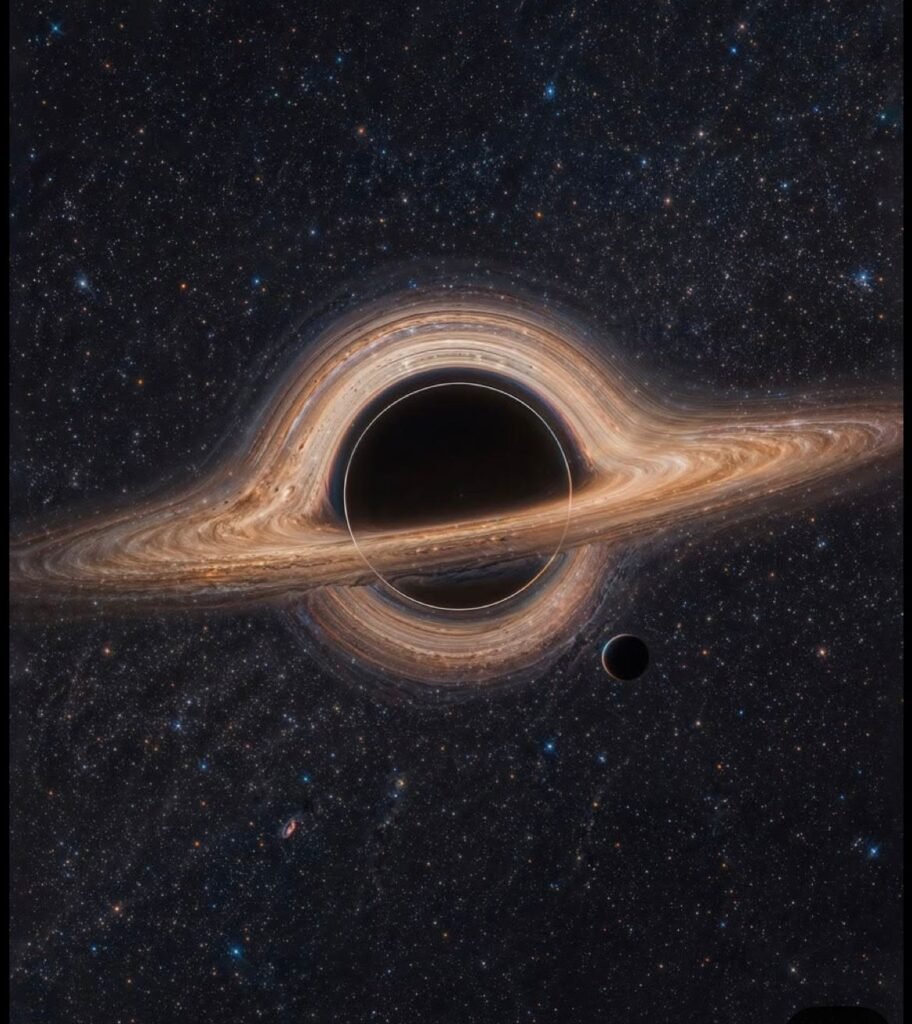
A black hole is a region in space where gravity becomes so powerful that nothing, not even light, can escape from it. Black holes form when massive stars collapse after exhausting their nuclear fuel.
The gravitational pull inside a black hole becomes extremely intense, creating what scientists call a singularity. Around the singularity exists a boundary known as the event horizon, which marks the point where escape becomes impossible.
NASA explains black hole science and discoveries in detail here: https://science.nasa.gov/universe/black-holes/
Why Black Hole Research Is Important in 2026
Scientists believe black holes may hold important answers about the universe.
Black hole investigations help researchers study gravity, time distortion, galaxy formation, quantum physics, dark matter behavior, and the expansion of the cosmos. In 2026, new space telescopes and AI-powered research systems are improving scientists’ ability to observe distant cosmic events more accurately than ever before.
Researchers also hope black hole studies may eventually help explain whether unknown dimensions or hidden physical laws exist beyond current scientific understanding.
Supermassive Black Holes and Galaxy Centers
Most large galaxies contain supermassive black holes at their centers.
These enormous black holes can contain millions or even billions of times the mass of the Sun. Scientists believe they play a major role in controlling galaxy growth and star formation.
Astronomers are currently investigating how supermassive black holes influence nearby stars, cosmic gas clouds, and galactic structures.
Space telescope discoveries and galaxy research are regularly updated through the Hubble Space Telescope website: https://hubblesite.org/
Black Hole Collisions in 2026
One major area of research in 2026 involves black hole collisions.
When two black holes move close together, they eventually merge into a larger black hole. During this violent event, massive amounts of energy are released in the form of gravitational waves.
Scientists use highly sensitive observatories to detect these invisible ripples traveling through space-time. Black hole collisions provide valuable information about gravity and cosmic evolution.
Researchers continue monitoring black hole merger events using advanced observatories like LIGO: https://www.ligo.caltech.edu/
Gravitational Waves and Space-Time Distortions
Gravitational waves are one of the most important scientific discoveries connected to black holes.
These waves are tiny disturbances in space-time caused by extremely powerful cosmic events such as black hole collisions and neutron star mergers.
Albert Einstein first predicted gravitational waves through his Theory of Relativity many decades ago. Modern technology finally allowed scientists to confirm their existence.
In 2026, astronomers are studying gravitational wave signals to better understand how the universe behaves under extreme conditions.
More information about gravitational wave science can be found here: https://www.space.com/gravitational-waves
Strange Cosmic Signals Detected in Space
Astronomers in 2026 are also studying mysterious cosmic signals detected from deep space.
Some radio bursts, X-ray emissions, and unusual energy patterns may be linked to black holes or unknown cosmic phenomena. Scientists are analyzing these signals to determine whether they originate from collapsing stars, black hole activity, neutron stars, or other unexplained sources.
Advanced radio telescopes and AI analysis systems are helping researchers process massive amounts of space data faster than before.
How Black Holes Affect Galaxies
Black holes influence the structure and behavior of galaxies in multiple ways.
Scientists believe supermassive black holes regulate star formation, control gas movement, and affect galactic temperatures through powerful radiation and energy jets.
Some black holes eject massive streams of high-energy particles across space, impacting surrounding cosmic environments.
Galaxy formation research remains one of the most important goals of modern astronomy.
More astronomy discoveries can be explored on the Space.com website: https://www.space.com/
Dark Matter and Black Hole Research
Dark matter remains one of the biggest mysteries in modern science.
Scientists cannot see dark matter directly, but they believe it makes up a large portion of the universe. Researchers are now studying whether black holes may help explain dark matter behavior and cosmic structure formation.
Several theories suggest black holes and dark matter may interact in ways scientists still do not fully understand.
Space researchers hope future discoveries could reveal entirely new physics beyond current scientific models.
Artificial Intelligence Helping Astronomers
Artificial intelligence is transforming black hole research in 2026.
AI systems can analyze enormous amounts of telescope data much faster than humans. Scientists use machine learning algorithms to identify unusual cosmic patterns, classify galaxies, predict black hole behavior, and process gravitational wave signals.
AI technology is helping astronomers discover new space phenomena that may previously have gone unnoticed.
Technology and astronomy are becoming increasingly connected in modern scientific research.
New Space Telescopes Studying Black Holes
Several advanced telescopes are improving black hole observations.
Modern observatories use infrared imaging, radio wave detection, X-ray analysis, and deep-space sensors to capture cosmic activity more clearly.
The James Webb Space Telescope continues helping scientists study distant galaxies and ancient cosmic structures in unprecedented detail.
NASA updates on Webb discoveries are available here: https://webb.nasa.gov/
Can Black Holes Destroy Earth?
Many people wonder whether black holes could threaten Earth.
Scientists confirm there are no known black holes close enough to destroy Earth. Although black holes possess powerful gravity, they only become dangerous if objects move extremely close to them.
Researchers continuously monitor space activity to ensure Earth remains safe from major cosmic threats.
Most black holes are located extremely far away from our solar system.
Theories About Wormholes and Time Travel
Some scientists believe black holes may connect to theoretical wormholes.
Wormholes are hypothetical tunnels linking different points in space and time. Although no direct evidence currently proves wormholes exist, physicists continue exploring these possibilities through advanced mathematical models.
Black holes also raise questions about time distortion because gravity affects the flow of time according to Einstein’s relativity theory.
These concepts remain highly theoretical but continue fascinating scientists worldwide.
Future Black Hole Investigations Beyond 2026
Future black hole research may lead to extraordinary scientific breakthroughs.
Scientists hope future investigations could help explain:
The true nature of gravity, The origin of galaxies, Quantum mechanics and relativity connections, Dark matter and dark energy, Possible hidden dimensions, The early history of the universe.
New generations of space telescopes, AI systems, and deep-space observatories are expected to improve scientific understanding dramatically over the coming decades.
Challenges of Studying Black Holes
Studying black holes remains extremely difficult because they cannot be observed directly.
Scientists rely on indirect evidence such as radiation emissions, star movement, gravitational effects, and wave signals to study black holes.
Deep-space observations also require expensive technology, advanced computing systems, and years of international scientific collaboration.
Despite these challenges, black hole research continues advancing rapidly.
Public Interest in Black Hole Discoveries
Black holes continue attracting enormous public interest worldwide.
Movies, documentaries, scientific articles, and social media discussions frequently highlight black hole discoveries because they combine mystery, science, and imagination.
Many students are becoming interested in astronomy and astrophysics because of growing public awareness about space science.
Educational resources about astronomy and space exploration are also expanding globally.
Conclusion
Black hole discoveries in 2026 are transforming humanity’s understanding of the universe. Scientists are using advanced telescopes, artificial intelligence, gravitational wave observatories, and deep-space investigations to study supermassive black holes, galaxy formation, cosmic signals, and dark matter behavior.
These discoveries may eventually explain some of the universe’s greatest mysteries, including the origins of galaxies, the behavior of gravity, and the hidden structure of space-time itself.
As technology continues advancing, black hole research is expected to unlock even more extraordinary scientific discoveries in the coming years. Humanity’s exploration of deep space is only beginning, and black holes remain one of the most exciting frontiers in modern astronomy.