
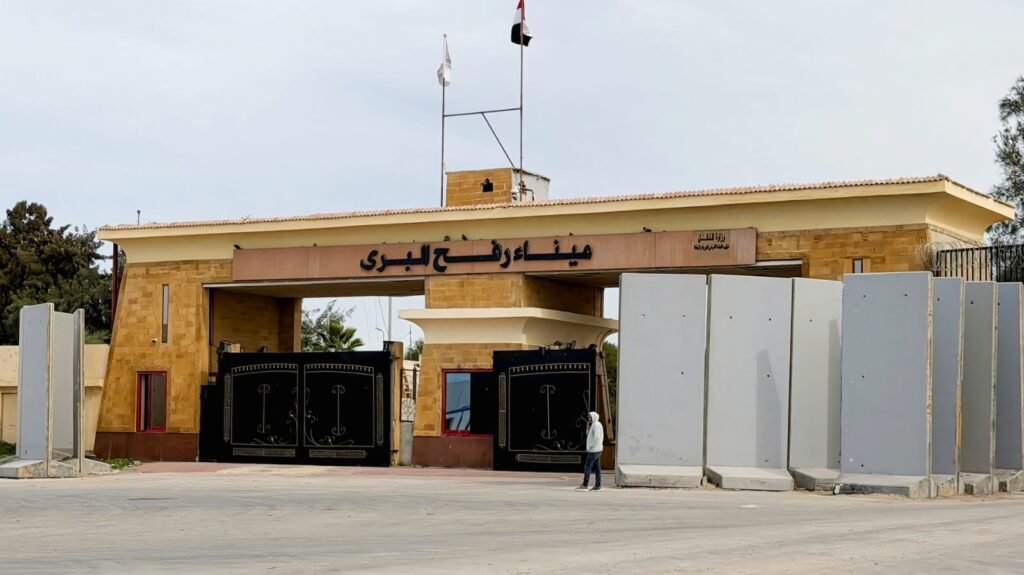
A Critical Humanitarian Gateway Restored—But Only Partially
In a significant yet cautious development, the Rafah Crossing—the sole border passage between Gaza and Egypt—has been partially reopened. This move comes at a time when the humanitarian situation in Gaza has reached alarming levels, with international organizations repeatedly warning of a deepening crisis. While the reopening is limited in scope, primarily allowing the evacuation of injured civilians for urgent medical treatment, it nonetheless represents a rare moment of relief in an otherwise volatile landscape.
The Rafah Crossing has long been a strategic and humanitarian lifeline for Gaza’s population. Its reopening signals not only logistical coordination but also a subtle shift in diplomatic efforts aimed at easing civilian suffering amid ongoing hostilities.
Humanitarian Relief Takes Center Stage
The immediate priority following the reopening has been the evacuation of critically injured individuals. Medical convoys and emergency response teams have been mobilized to facilitate the transfer of patients from Gaza to hospitals in Egypt. This limited access underscores the severity of the healthcare crisis inside Gaza, where hospitals are overwhelmed and resources are rapidly depleting.
Gaza humanitarian crisis, Rafah border reopening, and medical evacuation Gaza are now dominating global search trends, reflecting heightened international concern. Aid agencies view this development as a necessary, albeit insufficient, step toward addressing urgent medical needs.
However, humanitarian experts emphasize that reopening the crossing for medical evacuations alone does not resolve broader issues such as food shortages, lack of clean water, and inadequate shelter. The need for sustained and expanded access remains critical.
Ceasefire Efforts and Diplomatic Undercurrents
The reopening of Rafah coincides with renewed diplomatic efforts to stabilize the region. Negotiations involving regional stakeholders, including Egypt, have been instrumental in facilitating this limited access. Egypt’s role as a mediator continues to be pivotal, balancing geopolitical interests with humanitarian imperatives.
Despite these efforts, the ceasefire remains fragile. Both sides have accused each other of violations, and sporadic escalations persist. The reopening of the crossing should therefore be viewed within the broader context of ongoing negotiations rather than as a definitive step toward peace
Strategic and Political Implications
Beyond its humanitarian significance, the Rafah Crossing holds substantial strategic value. Control and access to this نقطة of passage influence not only the movement of people but also the flow of aid and, potentially, political leverage. For Gaza, Rafah represents a critical link to the outside world independent of Israeli-controlled crossings.
The partial reopening may also be interpreted as a calculated move to reduce international pressure. With mounting criticism over civilian casualties and humanitarian conditions, allowing limited access through Rafah could serve to alleviate some of the scrutiny faced by involved parties.
At the same time, this development raises important questions about sustainability. Will the crossing remain open? Will access be expanded to include essential goods and humanitarian aid? These uncertainties continue to shape both policy discussions and public discourse.
On-the-Ground Reality: A Crisis Far From Over
While headlines highlight the reopening, the situation on the ground in Gaza remains dire. Large portions of infrastructure have been damaged or destroyed, leaving thousands displaced. Access to basic necessities—including food, water, and electricity—remains severely restricted.
The Rafah Crossing, even when operational, cannot singlehandedly resolve these systemic challenges. Its limited reopening offers temporary relief but falls short of addressing the scale of the crisis. For many residents, the crossing symbolizes hope—but also the limitations of current international responses.
Gaza crisis update 2026, Rafah crossing news today, and humanitarian aid Gaza border continue to trend, reflecting a global audience that is both concerned and engaged.
What Comes Next? A Delicate Balance Between Hope and Uncertainty
The partial reopening of the Rafah Crossing is undeniably a positive development, but it must be understood within a broader, more complex context. It highlights the intersection of humanitarian need, political strategy, and international diplomacy.
For meaningful progress, sustained access, comprehensive ceasefire agreements, and coordinated humanitarian efforts will be essential. Without these, the reopening risks becoming a symbolic gesture rather than a transformative solution.
As the situation evolves, the world watches closely. The Rafah Crossing stands not only as a physical gateway but also as a barometer of the region’s stability. Whether it becomes a channel for lasting relief or remains a temporary measure will depend on the actions taken in the days and weeks ahead.


