
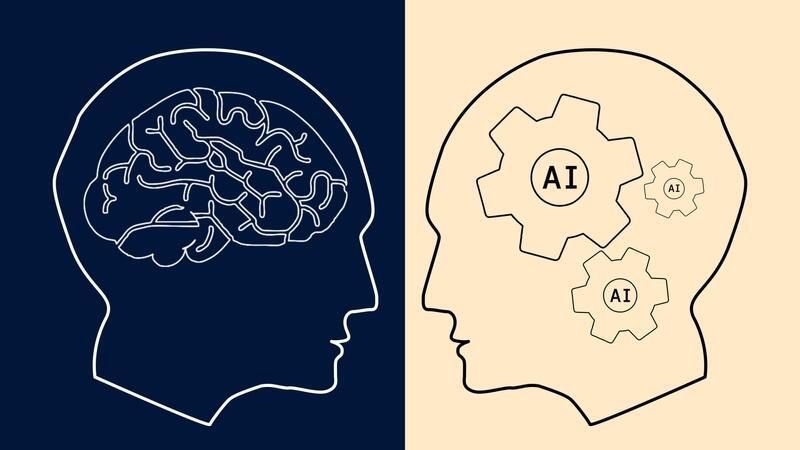
The rapid rise of artificial intelligence (AI) is transforming how the world works. From chatbots handling customer service to algorithms analyzing massive datasets, AI is becoming a core part of modern industries. This shift has sparked a global debate: will machines replace humans, or will they simply change the way people work?
The reality lies somewhere in between. AI is not just eliminating jobs—it is reshaping them. Over the next decade, the relationship between humans and machines will evolve into a partnership where each plays to its strengths. Understanding this transformation is essential for students, professionals, and businesses preparing for the future
World Economic Forum → https://www.weforum.org/
What Is AI and Why It Matters
Artificial intelligence refers to systems that can perform tasks usually requiring human intelligence, such as learning, problem-solving, and decision-making. Fields like Machine Learning and Natural Language Processing are enabling machines to understand patterns and communicate more naturally.
AI matters because it increases efficiency, reduces costs, and allows organizations to scale operations faster than ever before. However, its growing capabilities also raise concerns about job displacement.
McKinsey & Company → https://www.mckinsey.com/
Jobs Most Likely to Be Replaced by AI
Certain types of jobs are more vulnerable to automation—especially those involving repetitive, predictable tasks.
Data Entry and Administrative Work: AI systems can process and organize data much faster than humans.
Customer Support (Basic Level): Chatbots can answer frequently asked questions 24/7.
Manufacturing and Assembly Lines: Robots can perform physical tasks with precision and consistency.
Retail Cashiers: Automated checkout systems are already reducing the need for human cashiers.
Organizations like McKinsey & Company estimate that a significant percentage of routine jobs could be automated in the coming years. However, this does not mean all jobs will disappear—it means they will evolve.
OECD → https://www.oecd.org/
Jobs That Will Survive and Thrive
While AI is powerful, it cannot fully replace human creativity, emotional intelligence, and complex decision-making. Jobs that rely on these skills are expected to grow.
Creative Roles: Writers, designers, and artists bring originality that AI struggles to replicate authentically.
Healthcare Professionals: Doctors and nurses require empathy and human judgment.
Leadership and Management: Strategic thinking and interpersonal skills remain uniquely human.
Education and Training: Teachers adapt to student needs in ways machines cannot fully replicate.
According to World Economic Forum, millions of new roles will emerge that combine human and AI capabilities.
MIT Technology Review → https://www.technologyreview.com/
The Rise of Hybrid Jobs
The future is not about AI vs humans—it is about AI with humans. Hybrid jobs, where professionals use AI tools to enhance their work, will become the norm.
A marketer using AI for data analysis but creating human-centered campaigns.
A doctor using AI for diagnosis support while making final decisions.
A programmer working alongside AI coding assistants.
Companies like OpenAI are already developing tools that augment human productivity rather than replace it.
Skills Needed for the Future
To stay relevant in an AI-driven world, individuals must focus on skills that machines cannot easily replicate.
1. Critical Thinking
The ability to analyze situations and make informed decisions is essential.
2. Creativity
Innovation and original thinking will be highly valued.
3. Emotional Intelligence
Understanding and managing emotions is a uniquely human strength.
4. Digital Literacy
Basic knowledge of AI tools and technology will be necessary in almost every field.
5. Adaptability
The job market will continue to change, so flexibility is key.
Economic and Social Impact
AI will not only change jobs but also reshape economies. Countries investing in AI will likely see faster growth, while those that lag behind may face challenges.
There is also a risk of inequality. Highly skilled workers may benefit the most, while low-skilled workers could face job displacement. Governments and organizations must address this gap through education and training programs.
Reports from OECD highlight the importance of reskilling workers to ensure a balanced transition.
The future of work is not a battle between humans and AI—it is a transformation of how work is done. While some jobs will disappear, many new opportunities will emerge. The key to success lies in adapting to change, learning new skills, and embracing technology as a tool rather than a threat.
AI will continue to grow, but human qualities such as creativity, empathy, and critical thinking will remain irreplaceable. Those who combine these strengths with technological knowledge will be best positioned to succeed in the evolving job market.
In the end, the future belongs not to AI alone, but to those who learn how to work alongside it.