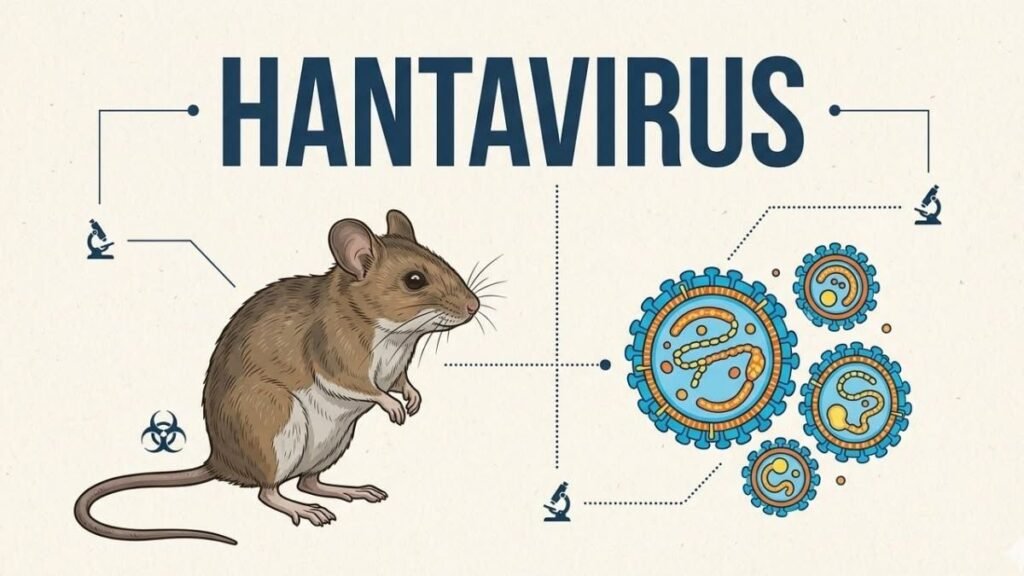
Hantavirus is a rare but potentially dangerous virus mainly spread through contact with infected rodents, especially rats and mice. The virus can infect humans through exposure to rodent urine, droppings, saliva, or contaminated air particles. Although hantavirus infections are uncommon compared to diseases like COVID-19 or influenza, health experts closely monitor outbreaks because some strains can cause severe respiratory illness and even death.
Recently, France reported a confirmed hantavirus case connected to an international cruise ship outbreak, creating concern across Europe and raising questions about global health safety. Authorities are now investigating the situation while reassuring the public that the overall risk remains low.
France Confirms Hantavirus Case Linked to Cruise Ship Outbreak
France officially confirmed a hantavirus infection after a passenger aboard the expedition cruise ship MV Hondius tested positive. The cruise ship had recently attracted international attention after multiple suspected cases emerged during the voyage.
According to French health authorities, the infected individual was immediately isolated after testing positive. Medical teams also launched contact tracing procedures to identify anyone who may have been exposed to the virus during the trip.
The incident quickly became one of the most discussed public health stories in Europe because hantavirus cases are extremely rare in France.
Why the France Hantavirus Case Became Major News
Several reasons contributed to the international attention surrounding the France hantavirus case:
Rare Human Infection in Europe
Hantavirus infections are uncommon in Western Europe compared to some regions in South America and Asia. A confirmed case in France naturally triggered concern among health agencies.
Cruise Ship Environment
Cruise ships often attract attention during disease outbreaks because passengers remain in close contact for extended periods. After the COVID-19 pandemic, public sensitivity toward cruise-related infections increased significantly.
Concerns About Human-to-Human Transmission
Most hantavirus strains spread through rodents rather than direct human contact. However, the Andes strain has shown limited human-to-human transmission in rare situations. This possibility caused anxiety online after reports linked the French case to a larger cluster onboard the ship.
Timeline of the France Hantavirus Incident
Initial Reports Emerge
The first reports surfaced after several passengers onboard the MV Hondius experienced flu-like symptoms, including fever, fatigue, breathing difficulty, and muscle pain.
Medical authorities initially suspected a viral respiratory infection before laboratory testing confirmed hantavirus in some passengers.
France Identifies a Confirmed Positive Case
French health officials later confirmed that one passenger had tested positive after returning from the voyage. The patient received medical observation while authorities began tracing close contacts.
Contact Cases Monitored
More than 20 individuals connected to the infected passenger were placed under monitoring protocols. According to French officials, those contacts later tested negative, reducing fears of wider community transmission.
What French Health Authorities Are Saying
French health authorities emphasized that the situation remains under control. Officials stated there is currently no evidence of a widespread outbreak inside France.
Public Health Response Measures
Authorities implemented several important safety actions:
Isolation of confirmed cases, Contact tracing investigations, Monitoring exposed passengers, Coordination with international health agencies, Laboratory testing for suspected infections.
French health officials also advised the public to avoid misinformation spreading across social media platforms.
Understanding the Symptoms Reported in the France Case
The symptoms observed in the France hantavirus case closely matched known hantavirus infections.
Early Symptoms of Hantavirus
Patients often experience:
Fever, Severe fatigue, Headaches, Muscle pain, Chills Dizziness, Nausea.
Severe Symptoms That Can Develop Later
In serious cases, patients may develop:
Shortness of breath, Lung complications, Fluid buildup in the lungs, Low blood pressure, Kidney complications.
Medical experts warn that early symptoms can resemble influenza, making diagnosis difficult during initial stages.
Is the Hantavirus in France Dangerous?
Health experts say hantavirus can become serious, but panic is unnecessary.
Why Experts Are Monitoring the Situation Carefully
Although hantavirus infections are rare, certain strains can lead to severe respiratory disease known as Hantavirus Pulmonary Syndrome (HPS). This condition may require hospitalization and intensive care.
However, experts also stress several important facts:
The virus does not spread as easily as COVID-19, Most cases involve rodent exposure, Large-scale outbreaks remain uncommon, Early medical attention improves outcomes.
Could the France Hantavirus Case Spread Across Europe?
At the moment, European health agencies do not believe the France case represents the beginning of a large outbreak.
Current Risk Assessment
Health experts currently describe the public risk as low because:
Limited confirmed infections exist, Contact cases tested negative, No widespread community transmission has been detected, Authorities responded quickly.
Still, surveillance continues because scientists want to better understand how exposure occurred aboard the cruise ship.
How Hantavirus Usually Spreads
Understanding transmission is important for preventing fear and misinformation.
Main Sources of Hantavirus Infection
Hantavirus most commonly spreads through:
Rodent Droppings and Urine
When contaminated particles enter the air, humans may inhale the virus.
Contaminated Surfaces
Touching infected surfaces and then touching the face can increase risk.
Rodent Bites
Although less common, infected rodent bites may transmit the virus.
Does Hantavirus Spread Between Humans?
Most hantavirus strains do not spread easily from person to person. Scientists continue studying whether the cruise ship cluster involved a strain capable of limited human transmission.
Cruise Ship Investigation Continues
International investigators are still analyzing environmental conditions onboard the MV Hondius.
Areas Under Investigation
Authorities are examining:
Possible rodent exposure onboard, Passenger movement patterns, Shared facilities and ventilation, Medical histories of infected individuals.
The investigation aims to determine whether exposure happened during the voyage or before passengers boarded the ship.
WHO and International Health Agencies Respond
The World Health Organization (WHO) acknowledged the reported cases and stated that monitoring efforts are ongoing.
WHO’s Position on the France Hantavirus Situation
According to international health officials:
No global emergency has been declared, The situation remains contained, Continued surveillance is recommended, Travelers should remain informed but calm.
The WHO also encouraged countries to strengthen disease monitoring systems.
World Health Organization (WHO)
Social Media Reactions and Online Misinformation
Following the France hantavirus reports, social media platforms saw a rise in rumors and exaggerated claims.
False Claims Circulating Online
Some viral posts incorrectly claimed:
A “zombie virus” outbreak had started, Hantavirus spreads like COVID-19, Europe was entering lockdowns again.
Health experts strongly rejected these claims, calling them misleading and unsupported by evidence.
Why Accurate Information Matters
Public health specialists warn that misinformation can create unnecessary panic and distract from real preventive measures.
Can Hantavirus Be Prevented?
Yes. Experts say prevention mainly focuses on avoiding rodent exposure.
Prevention Tips Recommended by Experts
Keep Living Areas Clean
Avoid food waste and seal garbage properly.
Avoid Contact With Rodents
Do not touch wild rodents or clean droppings without protection.
Use Protective Equipment
Masks and gloves help reduce exposure during cleaning.
Maintain Ventilation
Open windows when cleaning dusty or enclosed spaces.
Centers for Disease Control and Prevention (CDC) Hantavirus Information
France Hantavirus Case Raises Questions About Global Preparedness
The France hantavirus case has renewed discussions about global disease surveillance and rapid response systems.
Lessons Health Experts Are Highlighting
Faster Detection Matters
Early testing and reporting helped authorities respond quickly.
Countries coordinated information sharing immediately after the cruise ship reports emerged.
Public Communication Must Improve
Experts say governments must continue providing clear updates to prevent misinformation.
Final Thoughts on the France Hantavirus Case
The confirmed hantavirus case in France has understandably attracted global attention due to the virus’s rarity and the cruise ship connection. However, health officials continue emphasizing that the current risk to the public remains low.
While hantavirus can become serious in certain cases, experts stress that it does not spread easily like major pandemic viruses. French authorities, the WHO, and international medical teams are actively monitoring the situation while investigating how exposure occurred.
For now, the best approach is staying informed through reliable medical updates rather than viral social media rumors. The France case serves as an important reminder that global health systems must remain alert and prepared for emerging infectious diseases.